1927 A Short Critical History of Architecture| Antique Batsford
1927 A Short Critical History of Architecture| Antique Batsford
Couldn't load pickup availability
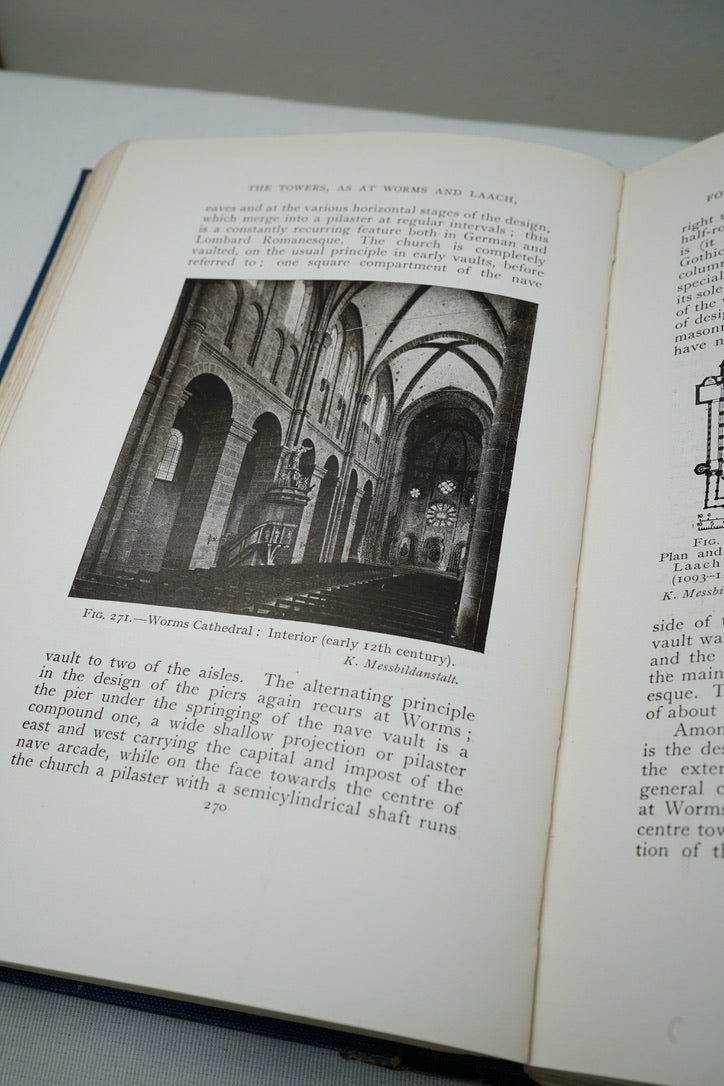
Step into the world of temples, cathedrals, and early modern design with A Short Critical History of Architecture (Second Edition) by H. Heathcote Statham, revised and enlarged, and edited by architect G. Maxwell Aylwin. Published in London by B. T. Batsford Ltd., this is the 1927 second edition, a classic early 20th century overview written at a moment when architecture was rapidly changing and “modern” design was beginning to challenge centuries of tradition. The book moves through major eras in a clear, storylike progression, from Egyptian and Greek foundations to Roman engineering, Romanesque and Gothic grandeur, Renaissance balance, and into the modern world, making it a fantastic starter reference for architecture lovers and a handsome decorative object for shelves and styling. The deep blue cloth binding is beautifully gilt stamped, featuring a vertical “timeline” of architectural styles on the front board and bold gilt lettering on the spine, the kind of design that looks instantly smart in a library, office, or studio. A photographic frontispiece adds period character and sets the tone for a thoughtful, critical survey rather than a dry textbook.
The blue cloth boards are solid and the gilt stamping on the front board remains bright and legible. Edge and corner wear is visible, with light rubbing and small fraying at the spine ends. The spine shows expected darkening and surface scuffing consistent with age and use over more than a century. Interior pages are age-toned throughout, which is normal for paper of this period and does not affect readability. The front endpapers and pastedown show noticeable foxing and staining, and bear a previous owner signature and the handwritten date "1912." A good solid copy with honest age.
Shipping & Returns
All antique and vintage items are shipped from our warehouse in Bluffdale, Utah. Each piece is carefully packed by hand using archival materials and custom crating when necessary.
Shipping costs are calculated at checkout based on the size and weight of the item. Local pickup is available at the AMD Warehouse.
Furniture is the exception. Because of size and weight, furniture shipping is quoted separately rather than calculated at checkout. Send a DM on Instagram or email austynmariedesign@gmail.com for a quote, or arrange your own shipping from the warehouse.
All sales of antique and vintage items are final due to their unique, one-of-a-kind nature. Illuminé candles and The Collector's Guide may be returned within 14 days of delivery if unopened and in original condition.
If your piece arrives damaged, please photograph the damage immediately (including packaging), contact us within 48 hours at austynmariedesign@gmail.com, and do not discard any packaging.
Important Info About Antique & Vintage
Every antique and vintage item we carry has lived a life before arriving in your home. These are not factory-made products. They are objects with history, character, and the marks of time.
Age-appropriate wear, patina, minor imperfections, and signs of previous use or repair are inherent to antique and vintage items and are not considered defects. These characteristics are part of what makes each piece unique and are often what give it its beauty and value.
We describe the condition of each piece as accurately as possible in the listing. If you have specific questions about a piece before purchasing, please reach out. We are always happy to provide additional photos or details.
Colors may appear slightly different on screen due to monitor settings and photography lighting. We do our best to represent each item accurately.
Descriptions, dates, attributions, materials, and measurements are provided in good faith and reflect our best assessment based on research, physical examination, and the information available to us. Antique and vintage pieces often carry incomplete or unverifiable histories. Where a detail is an assessment rather than a confirmed fact, it is identified as such. Measurements are approximate. All items are sold as-is, with the photographs and condition report governing.