31.5“ W x 45“ H
Unsigned
Oil on Canvas
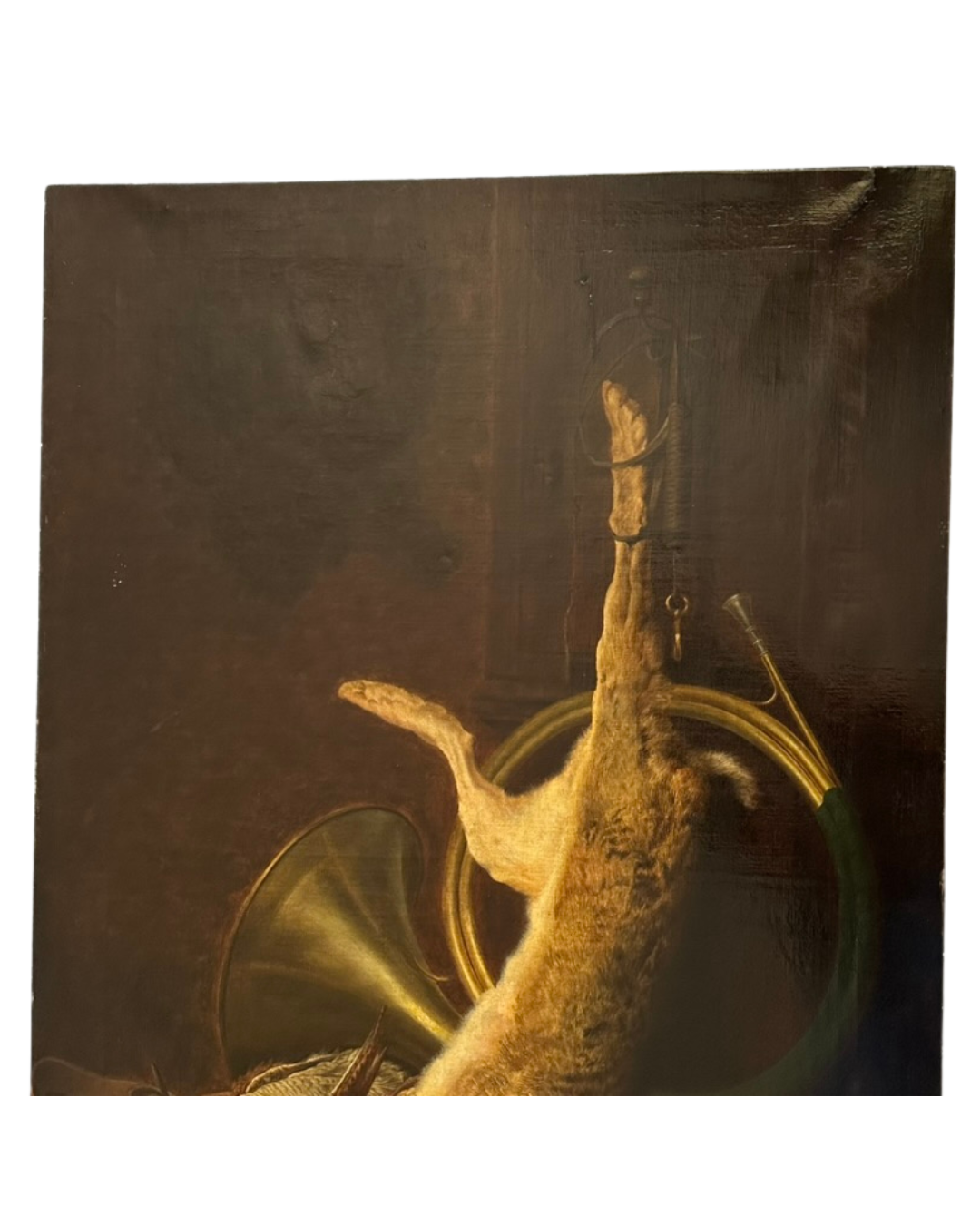
This exceptional oil painting is a powerful example of the hunting still life tradition, deeply rooted in the artistic legacy of the 17th- and 18th-century old masters. Depicting a hunted rabbit suspended before a hunting horn, the composition is rendered with striking realism, meticulous brushwork, and a sophisticated use of light and shadow that pays direct homage to painters such as Jan Weenix, Jean-Baptiste Oudry, and Alexandre-François Desportes, artists renowned for transforming hunting scenes into grand visual statements about status, mortality, and nature’s fragility.
In European aristocratic households, paintings of game animals like rabbits were far more than decorative trophies. They were embedded with layered meanings. The rabbit, soft, swift, and traditionally seen as both prey and symbol of vulnerability, represented the fleeting nature of life. These works, often commissioned to hang in dining halls, game rooms, or hunting lodges, served as both celebration and caution: a triumph of man over nature, and a quiet meditation on impermanence. In the vanitas tradition, even without the overt inclusion of skulls or extinguished candles, the lifeless form of the rabbit subtly reminds us of mortality and the ephemeral nature of worldly pleasures.
What sets this particular piece apart is the quality of its execution. The artist's hand is highly trained, evident in the texture of the rabbit's fur, so convincingly rendered that it almost invites touch, and the dramatic use of chiaroscuro, which gives the subject a sculptural presence against the darkened background. The horn behind the rabbit, painted with a rich golden sheen and subtle green wrapping, adds both symbolic and compositional balance, guiding the viewer’s eye through the work.
Materially, the painting appears to be executed on handwoven linen canvas, mounted on a traditional stretcher with corner keys and clear signs of historical age. The surface shows fine craquelure and subtle wear in the upper corners, which add character and confirm its vintage authenticity. These physical elements, along with the absence of modern materials or machine-made components, strongly suggest that this is either an early 19th-century work or possibly even older, painted during a time when academic artists were still trained directly in the techniques of the old masters.
Condition:
This painting is in good to moderate condition for its age, with several visible signs of wear and surface aging that reflect its 19th century origin. The canvas is a handwoven linen with an irregular warp and weft, typical of pre-industrial materials. It is mounted on a traditional wooden stretcher with corner keys intact. The surface displays a fine craquelure pattern throughout, consistent with natural aging of the oil paint film, and it remains stable overall.
There are notable condition issues in the upper portion of the canvas. The top left quadrant shows an area of worn varnish or possible overcleaning, resulting in a dulled patch with some color loss and minor surface abrasion. This region may have undergone past restoration. The top right corner exhibits scuffing and several lines of visible paint loss extending diagonally near the edge, likely from handling or contact with framing elements. These flaws do not compromise the integrity of the composition but should be disclosed as part of the painting’s authentic aged character.
Elsewhere, the painting has preserved its tonal depth and detail. No large tears or structural breaches are visible. The reverse shows age-consistent canvas discoloration and the expected buildup of dust and environmental wear, further supporting its age. There are no signs of relining. The stretcher remains solid and unwarped, with no signs of recent tampering or replacement.
Overall, this is a visually powerful and well-executed historical painting that remains highly displayable. The wear adds to its antique charm and does not detract from its dramatic impact in situ. Additional conservation work is not required for display, though a future owner may choose to address the upper corners for further preservation.