This second edition of The Early Flemish Painters: Notices of Their Lives and Works by J. A. Crowe and G. B. Cavalcaselle was published in 1872 by John Murray in London. Crowe and Cavalcaselle were among the pioneering art historians of the 19th century, and their work played a significant role in shaping scholarly understanding of the Northern Renaissance. By examining painters such as the Van Eycks, Rogier van der Weyden, and Hans Memling, the authors aimed to trace the origins, techniques, and stylistic evolutions of Flemish painting. The book was written during a period when art history was becoming more methodical and evidence-based, reflecting a broader Victorian enthusiasm for researching Europe’s cultural and artistic heritage. In this sense, it contributed to the systematic study of early Northern Renaissance art at a time when the subject was gaining scholarly momentum across Europe.
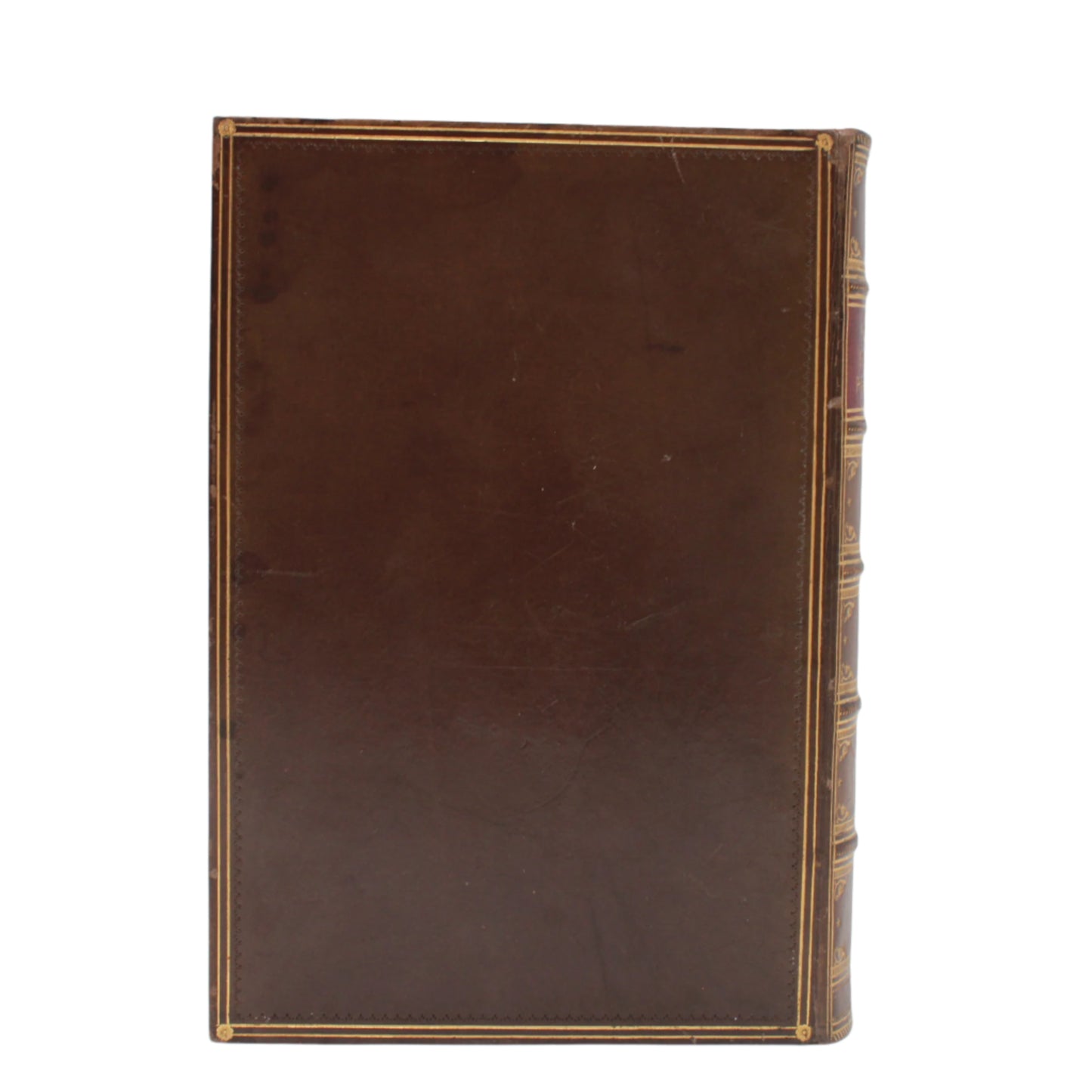
The binding is a handsome full leather prize binding—evident from the inscription on the marbled endpapers referencing the Glasgow School of Art and Haldane Academy, Session 1877. The front board features an elegant gilt oval cameo, and the spine is adorned with raised bands, gilt compartments, and a red leather label reading “Early Flemish Painters.” All edges are tinted red, adding an extra note of refinement. These details reflect the Victorian tradition of awarding exquisitely bound books to recognize academic or artistic achievement, underscoring the esteem in which art historical scholarship was held in educational institutions.
In essence, The Early Flemish Painters offers concise biographies and analyses of pivotal 15th- and early 16th-century Flemish artists, examining how they perfected oil painting techniques and influenced European art. A simple way to remember its core content is to note that it charts the transition from medieval methods to the fully realized Renaissance style in Northern Europe, highlighting the innovations that set these painters apart and the legacy they left for subsequent generations of artists.
Condition:
The book is in very good condition for its age. The leather boards retain much of their original luster, with minor scuffing around the edges and corners. The spine’s gilt decoration remains bright, and the hinges are firm, suggesting careful handling over the years. Internally, the marbled endpapers are vibrant, and although there may be some light foxing on a few pages, the text and any illustrations are clean and clearly legible.