Written In English, Beautifully Illustrated
8.25" H x 5.75" W x 1.5" D
Benvenuto Cellini’s Life reads like the ultimate Renaissance adventure: in his own razor-sharp voice, Florence’s most exalted, and most quarrelsome, goldsmith recounts his rise from a penniless apprentice to court sculptor for popes and kings. He opens in early-sixteenth-century Florence, mastering chasing and enameling under Giamberti, then heads to Rome where duels, debts and even a murder trial nearly undo him at the papal mint. Undeterred, Cellini travels to France to fashion Francis I’s legendary Saliera (the golden salt cellar), before returning to Florence to cast the monumental bronze Perseus and carve masterpieces for the Medici. Along the way he reveals secret alchemical rites, tricks of the metalsmith’s craft, and an unquenchable ambition that sees him spar with rivals, charm princes, and survive every calamity by wits and will alone. More than just a memoir, it’s part workshop manual, part courtroom drama, and wholly a testament to one man’s fiery genius at the heart of the High Renaissance
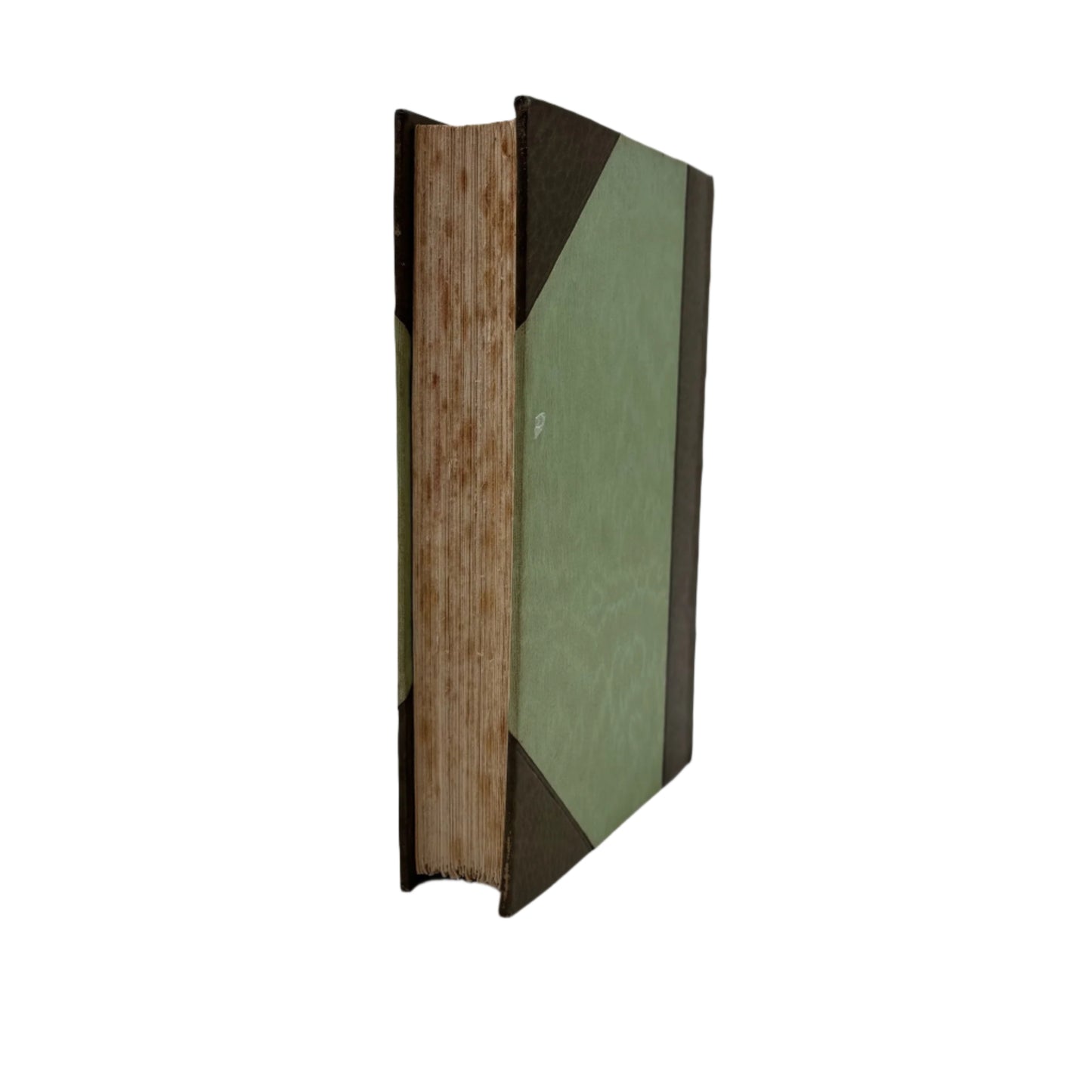
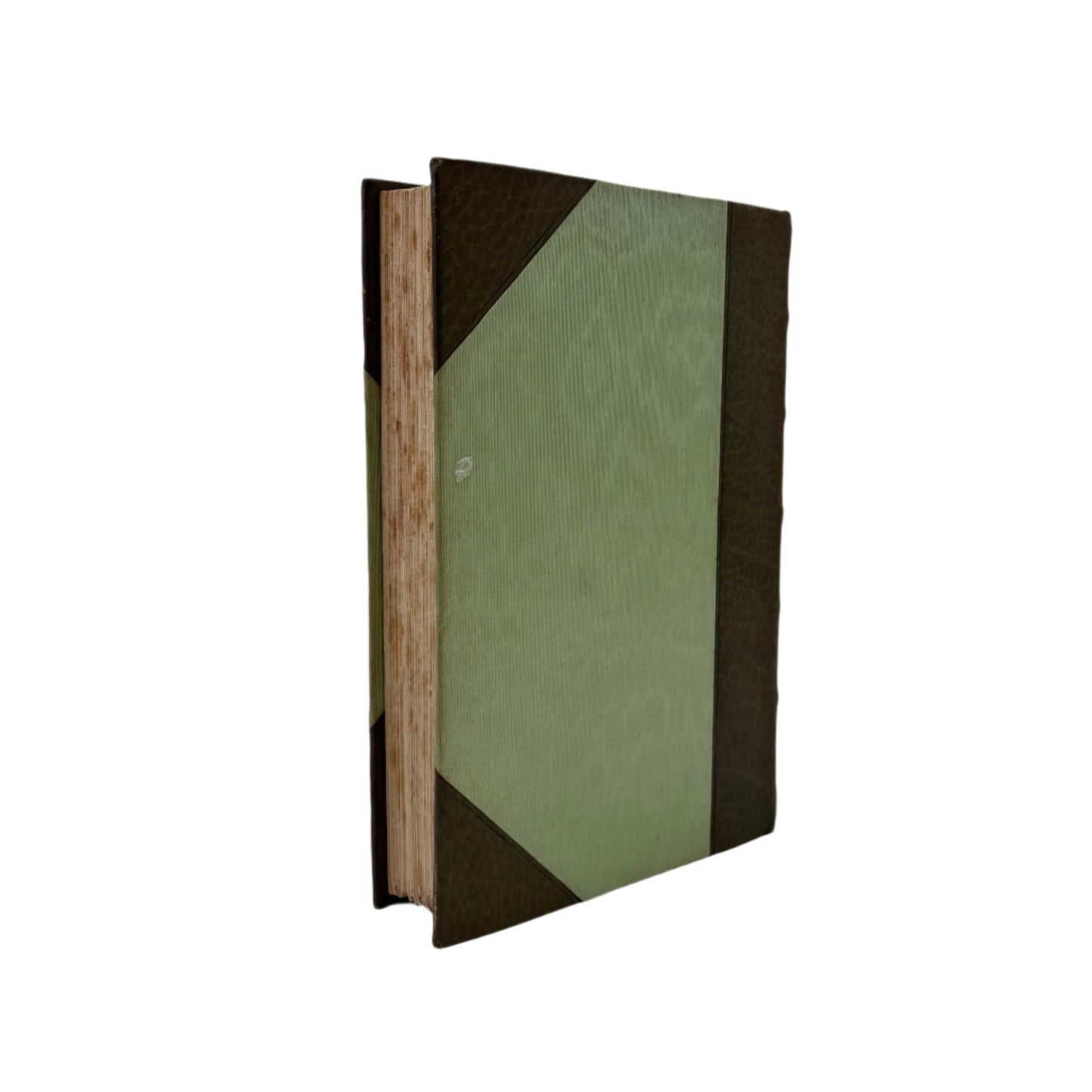
This particular copy is bound in a striking half dark brown calf over moss-green cloth, the spine re-backed and stamped with five raised bands and ornamented with oval gilt arabesques that echo Cellini’s own decorative flair. Inside, you’re greeted by vivid green, brown, and gold marbled endpapers and the crisp bookplate of Gertrude Lyford Boyd of Ayr, Scotland adorned with Union Jack and Stars & Stripes beneath her motto “Confido” a charming reminder of the transatlantic journey this 1911 edition has made.
Condition:
Overall the binding remains tight, the green leather spine mellowed to a warm brown with only trivial scuffs at the extremities, and the cloth boards show light edgewear and faint spotting but no tears. The gilt tooling on the spine still gleams, and the marbled endpapers retain their original vibrancy with just minimal rubbing. Internally, the text and plates are clean, bright, and free of inscriptions or losses, with only occasional, light foxing confined to the fore-edge and margins of a few leaves.