An exquisite antique silk embroidery showcasing delicate birds, blossoms, and scrolling foliage executed in soft tones of sage, blush, and steel blue. Worked entirely by hand in fine silk threads on a lustrous satin ground, this textile reflects Europe’s late 18th- to early 19th-century fascination with Chinoiserie — the Western interpretation of Chinese decorative art that swept through English and French interiors alike.
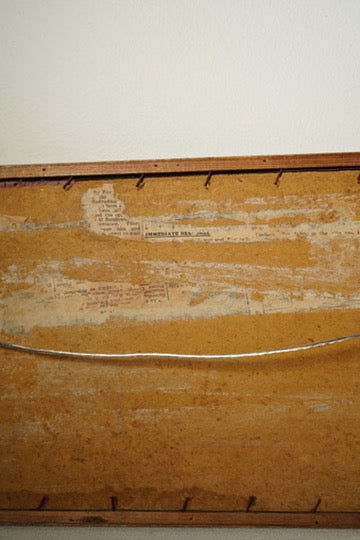
The symmetrical composition and airy palette suggest English or French origin, dating between about 1780 and 1850. The piece was later professionally framed in the early 20th century within a giltwood frame edged in a fine beaded molding. The reverse retains its original newspaper lining, portions of a 1930s British sports article referencing Scottish footballer Joe McMenemy, helping confirm the framing period.
The embroidery remains beautifully preserved, with soft age toning and faint spotting to the silk ground that attest to its history while maintaining its overall elegance. Under glass, the threads retain their subtle sheen and the pattern’s rhythmic repetition evokes the refined restraint of Regency-era design.
A graceful example of European textile artistry that bridges East and West, ideal for a dressing room, study, or layered gallery wall.
Details:
-
Origin: England or France
-
Date of Embroidery: c. 1780–1850
-
Frame Date: c. 1930 (British newspaper backing)
-
Medium: Hand-embroidered silk on satin ground
-
Frame: Original giltwood with beaded inner edge
-
Dimensions: 21" W x 8.25" H
-
Provenance: Acquired in London
Condition:
Very good antique condition for age. The embroidery remains finely preserved with threads bright and intact. The silk ground shows slight tonal variation and scattered age spotting typical of early textiles. Frame retains its original gilding with minor surface wear and small corner nicks. Glass is intact with light interior dust consistent with age. The newspaper-lined backboard, tacked with original wire brads, remains stable and historically informative.