8.25" H 5.75" W x 1.5" D
Custom Binding
Written In English
Marmion is an epic historical narrative poem by Sir Walter Scott, first published in 1804, and this edition appears to be a mid-to-late 19th-century reprint. The poem recounts the adventures and romantic exploits of Lord Marmion against the backdrop of early 16th-century Scotland and the Battle of Flodden Field (1513). Scott’s work weaves themes of chivalry, betrayal, honor, and national pride into a rich tapestry of medieval romance that helped cement his reputation as a key figure in the Romantic movement. At a time when Britain was experiencing a resurgence of interest in its own history and the medieval past, Marmion resonated with readers who were eager for tales of heroic exploits and historical intrigue. The poem not only served as entertainment but also contributed to a growing sense of Scottish national identity, influencing how the country’s history and folklore were perceived.
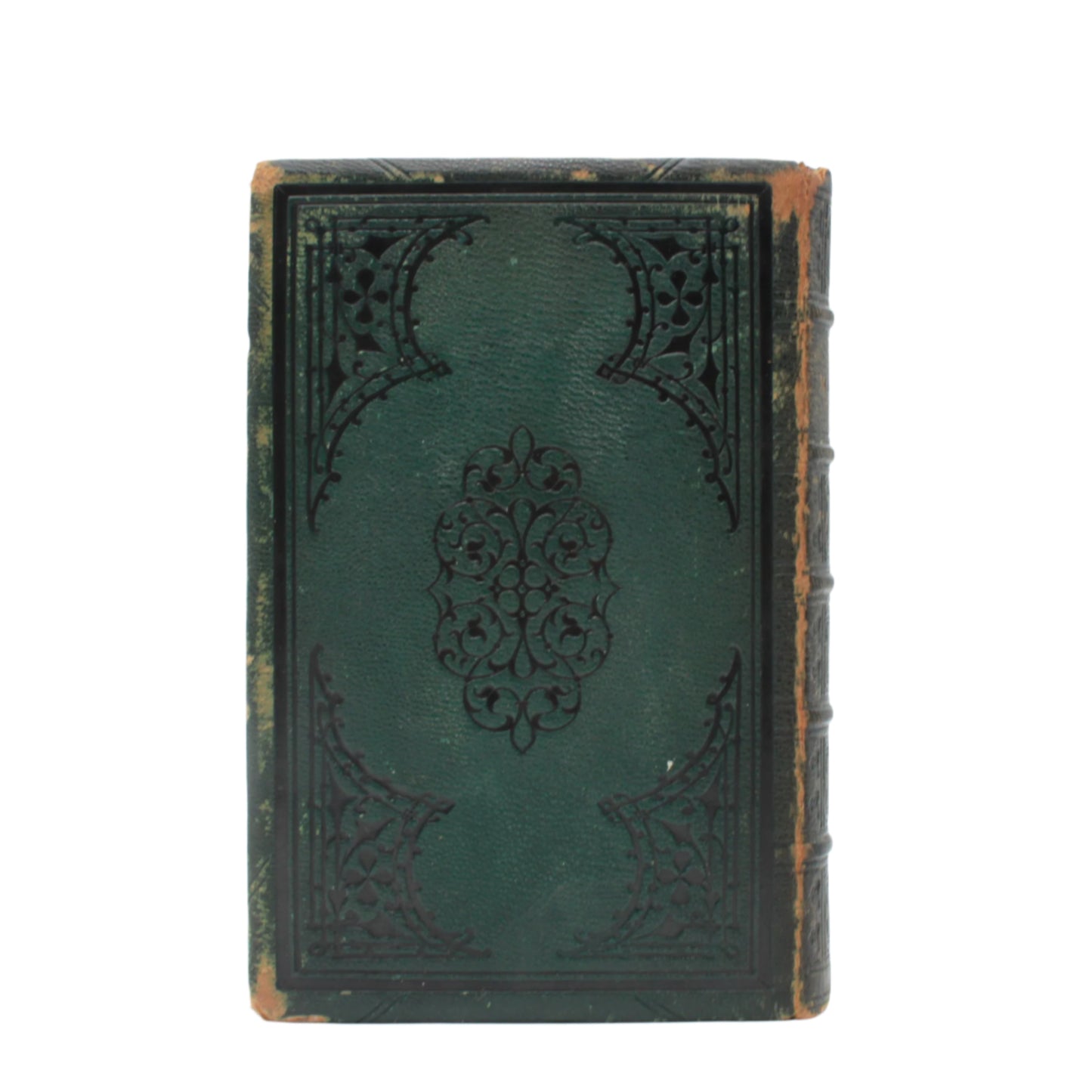
This particular volume is bound in attractive green leather featuring intricate blind-stamped decorative panels and raised spine bands, elements typical of high-quality Victorian binding. The page edges are lightly gilded, adding a touch of refinement, and the interior is enhanced with steel-engraved illustrations that complement Scott’s text. A bookplate on the inside cover hints at a notable provenance, suggesting that this copy was well cared for and valued by its previous owners.
In summary, Marmion is a stirring tale of love, betrayal, and honor set in medieval Scotland, written during the height of the Romantic era to evoke the chivalric spirit and historical pride of the nation. The Victorian edition’s elegant green leather binding, decorative details, and engraved illustrations make it not only a literary treasure but also a collectible work of art.
Condition:
Overall, the book is in good condition for its age. The leather shows some rubbing along the edges and corners, and there is minor wear along the spine, yet the decorative blind-stamping remains clear. The binding is secure, and the hinges are intact. Inside, the pages exhibit light foxing and age-toning typical of 19th-century paper, but the text block remains firmly bound and legible throughout. A well-placed bookplate further enhances its historical charm, making this edition a handsome example of a classic work that has been preserved with care over the years.